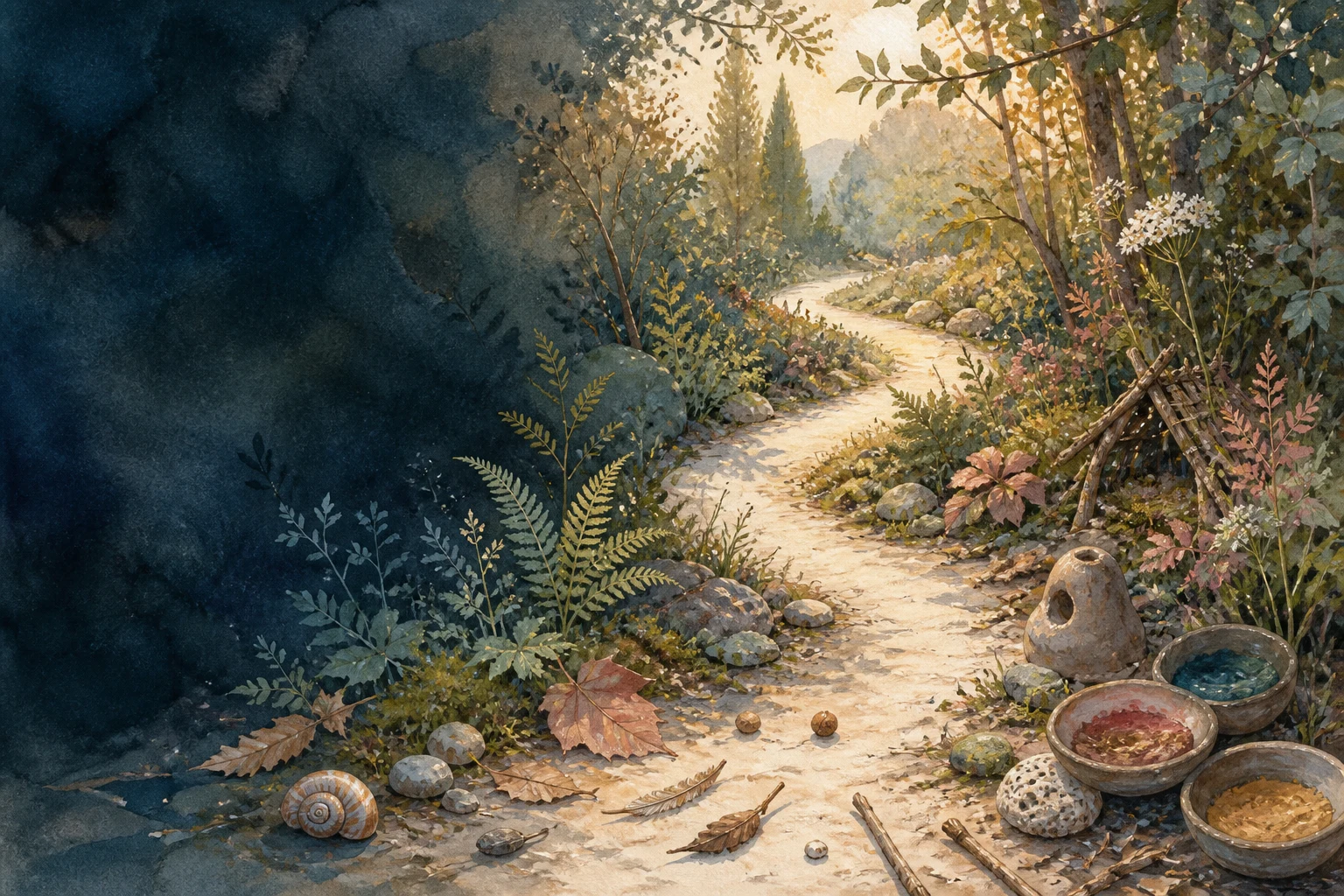
Watercolour of a bright forest path lined with leaves, stones and natural materials, a small twig house and bowls of earth pigments.

Art and education · 2025

Treasures of Nature

Discovering and creating with heart, hands and imagination

Final project in early-years educator training

The project did not begin with a ready-made craft task, but with close observation: found natural objects were collected, examined and transformed, eventually becoming pictures and stories.

Shabnam worked responsively, following the situations that arose. Ideas from free play determined the next steps, allowing the project to connect experiences of nature, artistic creation, language, movement and shared decision-making.

The illustrations are a preliminary, anonymised visual interpretation. Shabnam can replace them at any time with her own drawings or with motifs she has recreated herself. Children, children’s works, the institution and the employer remain private.
The path through the project

Five stations. One idea keeps growing.

The sessions did not follow a rigid timetable. Each grew out of the last: a found object became a structure, a figure became a story, and earth eventually became colour.

01
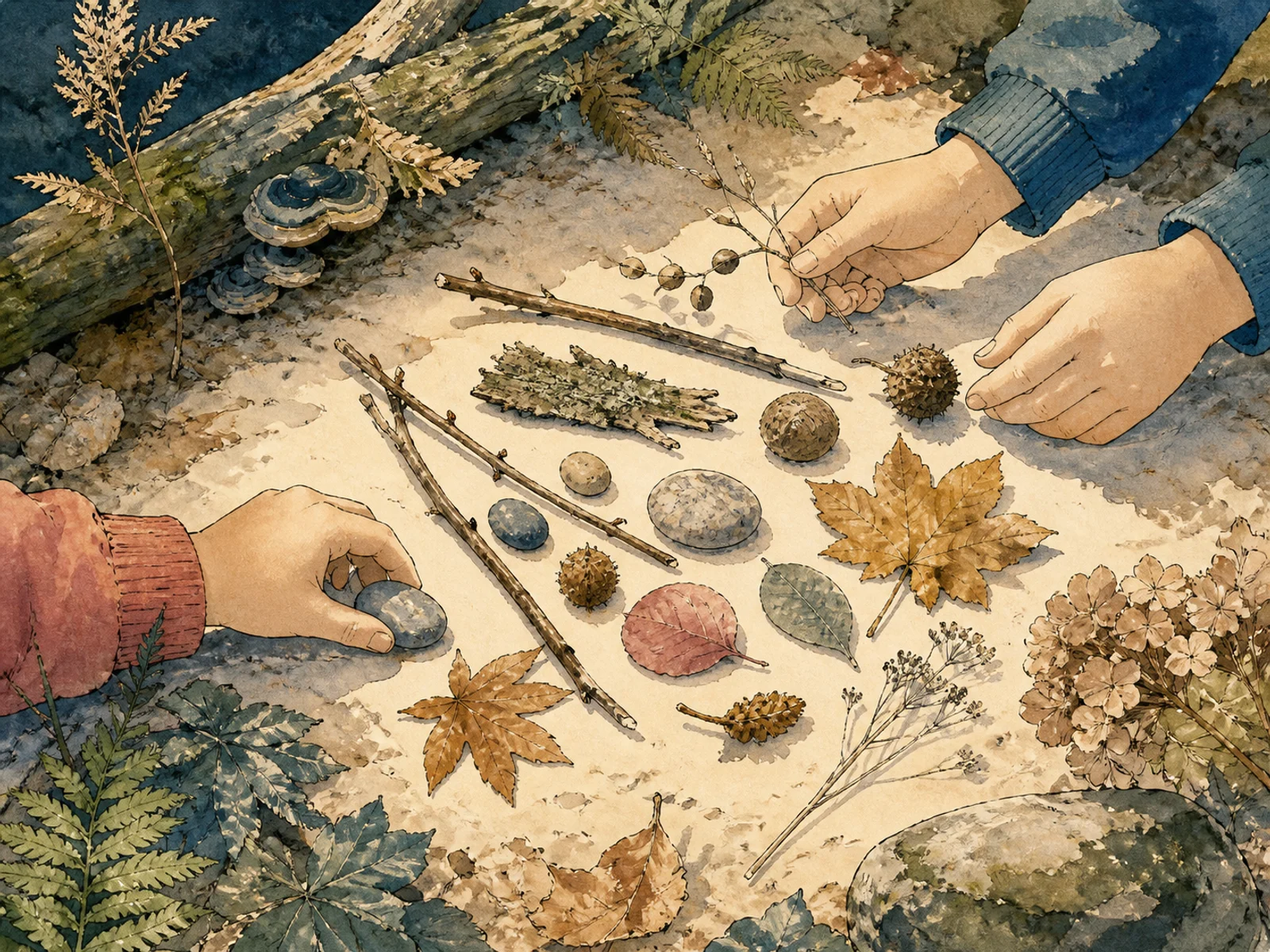
Illustration: hands arrange twigs, stones, seeds and leaves on pale paper.
Preliminary illustration · anonymised visual interpretation

Station 01

From finding to seeing

  • Collecting and presenting natural treasures

The opening stage turned casual finds into consciously valued treasures. Twigs, stones, seeds and leaves were observed, compared and shown to one another. What mattered was not the most beautiful object, but each person’s own discovery.

02
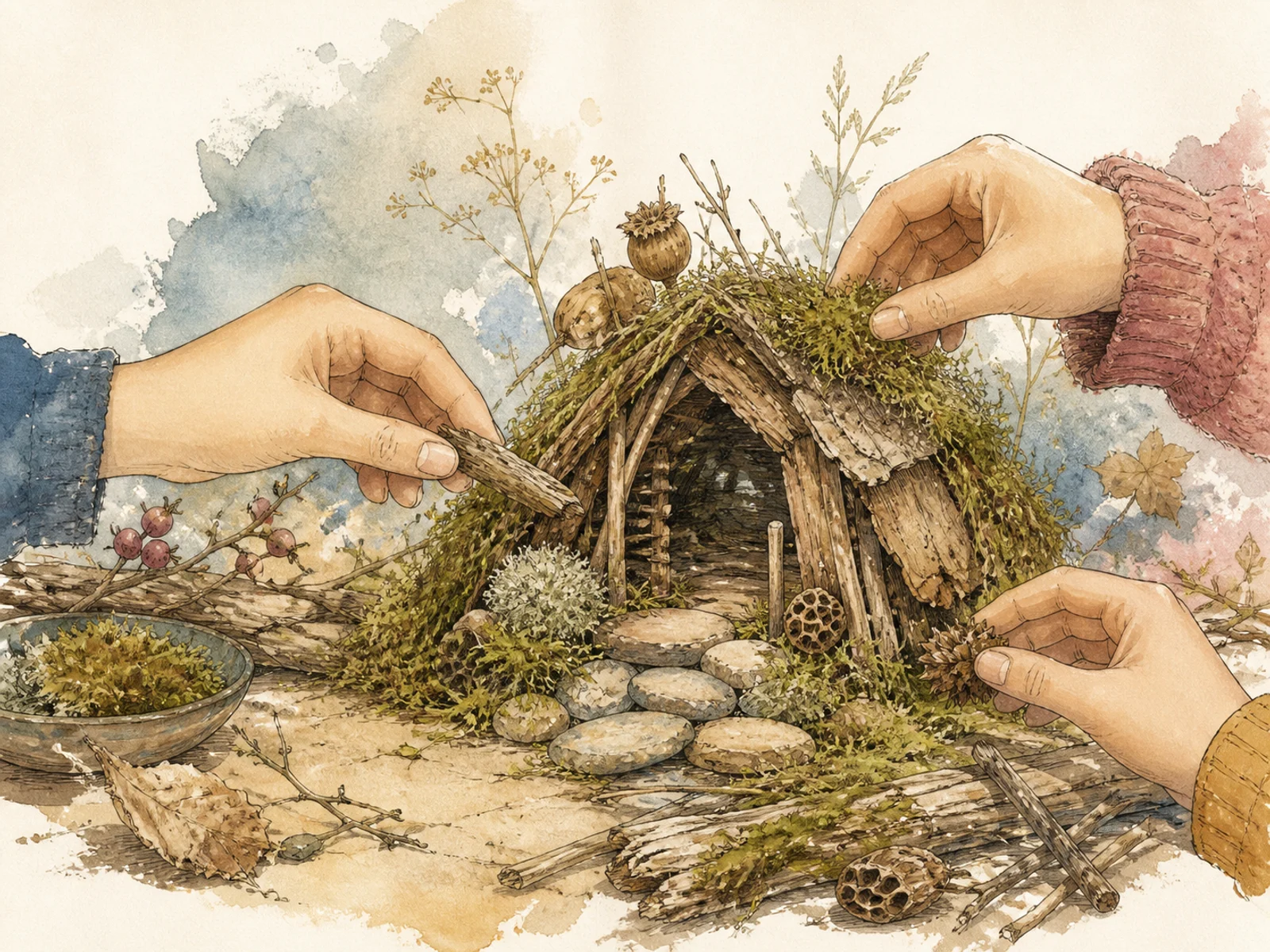
Illustration: hands build a small shelter from twigs, bark, moss and stones.
Preliminary illustration · anonymised visual interpretation

Station 02

Building and deciding

  • Building fairy houses
  • Creating fairies from natural materials

The wish to build stable houses and the idea of creating fairies led to a shared decision. Building became an exploration of materials, balance and support — while different ideas also had to be negotiated.

03
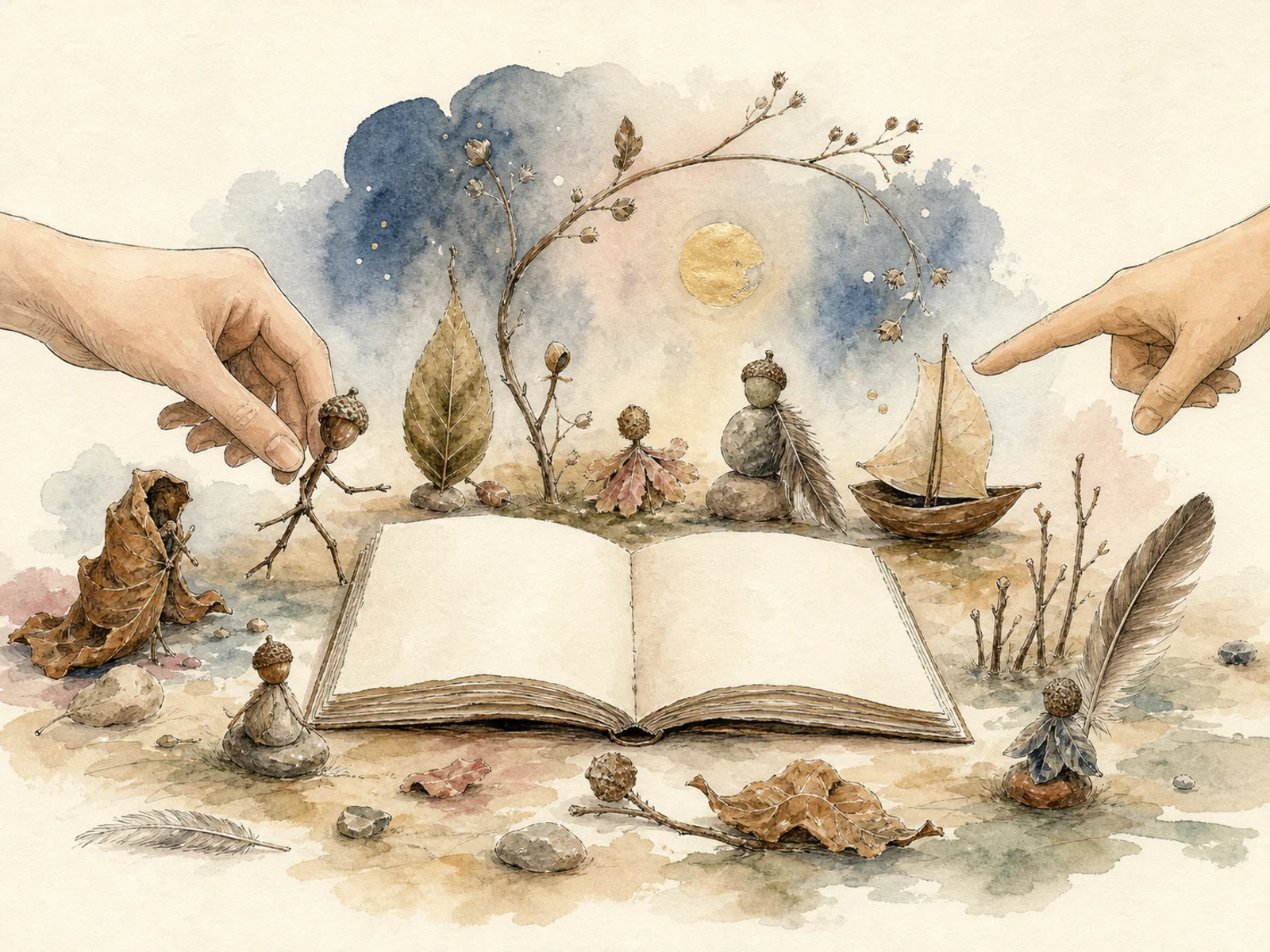
Illustration: natural materials become story characters in front of an open book.
Preliminary illustration · anonymised visual interpretation

Station 03

Figures become stories

  • Developing a shared fairy story

The figures they had made were given names, qualities and relationships. A shared fairy story grew from them. The project thus followed an idea that emerged through making rather than a result fixed in advance.

04
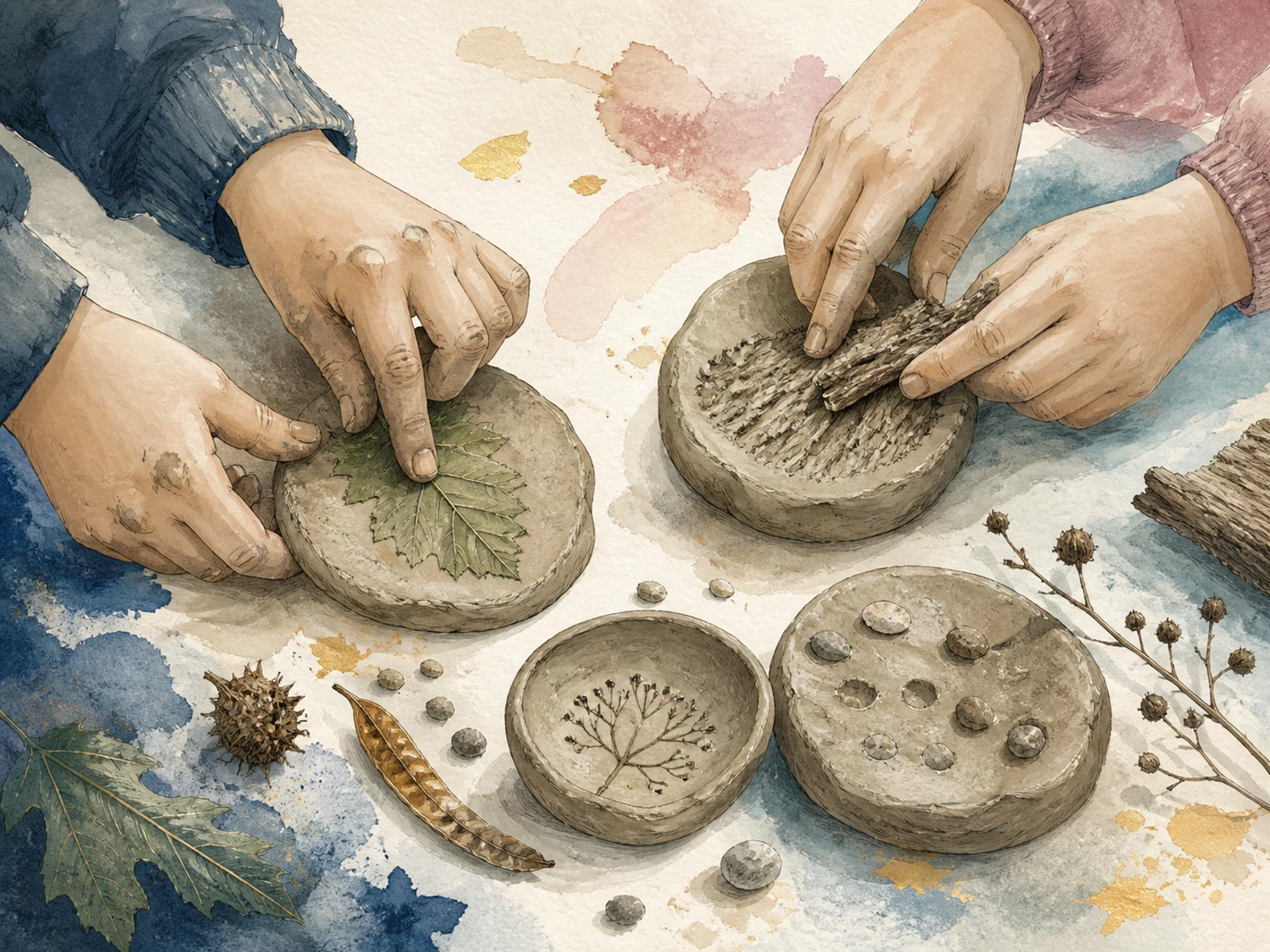
Illustration: hands press leaves, bark and small stones into soft natural clay.
Preliminary illustration · anonymised visual interpretation

Station 04

Thinking with the hands

  • Modelling snails and exploring surfaces

While modelling snails and other clay pieces, weight, resistance and texture could be experienced directly. Natural materials served as tools, impressions and elements of the design.

05
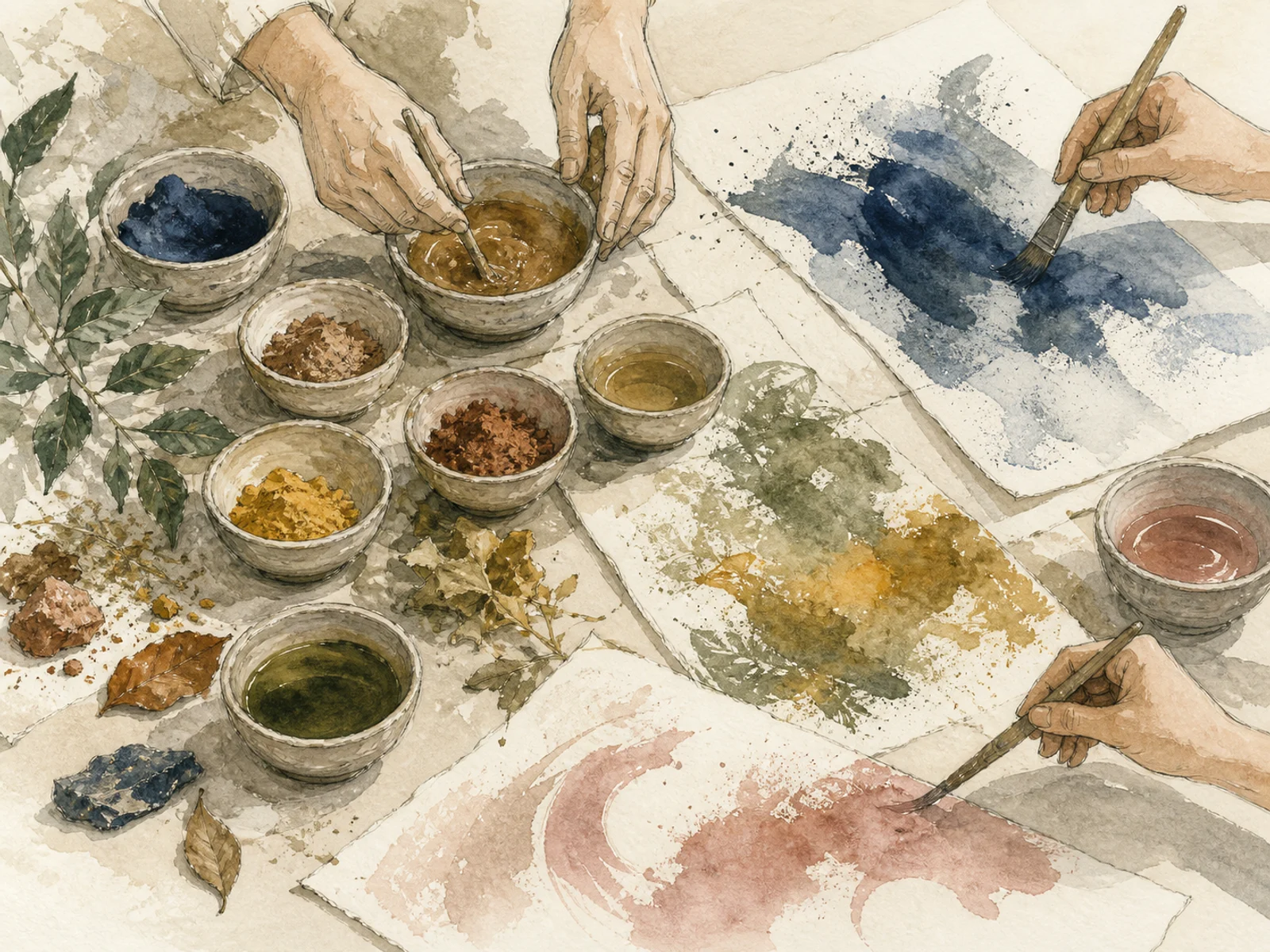
Illustration: hands mix natural pigments and paint with blue, ochre, green and pink on paper.
Preliminary illustration · anonymised visual interpretation

Station 05

Making colour

  • Collecting and preparing earth
  • Painting with self-made natural colours

Earth was collected, dried and prepared as colour. Fingers, brushes, twigs and leaves were used for painting. The shared picture showed that material research and visual language can emerge in the same process.

Educational approach

The outcome did not come first.

01

Observe

The starting point was recurring interests in free play — collecting, building, modelling and storytelling.

02

Decide together

Votes and spontaneous impulses changed the order and made the project a shared process.

03

Create openly

Materials offered possibilities but did not dictate a finished result. Different paths and tools remained welcome.

Reflection

„Nature and art are among my passions, so it was important to me to discover and collect together with the children and to create with natural materials.“

— From Shabnam’s annual report, 2025

Looking back, Shabnam describes how the creative impulses from nature continued beyond the project: the surroundings were perceived more consciously, and new ideas of the children’s own emerged in free play.